
How Do We Do?
Questioning actions that shape our world and that which we leave to our progeny

I’m grateful to be breathing this morning. As I often say, it’s another day in the bonus round. I found a few voice clips in my Instant Messenger this morning from Tina “Pippi” Ditlevsen about whom I wrote a piece a while ago:
Friendship

September 30, 2002 - 23 years ago today, I boarded a plane in Copenhagen, Denmark. I flew out after a year and 10 months living there. I had arrived on December 1, 2000 with three suitcases to start a gig as the manager of documentation for a small Web software firm. Initially, I was a one man documentation department but soon we …
Tina had just gotten off of the train after riding home from a 12-hour shift at Operaen in Christiana, an autonomous commune within Copenhagen, Denmark. She’d met a young man who was addled on cocaine and amphetamines and shared her own experience and wanted to share this with me. I hadn’t been awake enough to answer when she called just before 6 AM her time (about 11:40 PM my time but she related the story in four voice clips. I’m so grateful that she thought to call to tell me about this and her gratitude for the sober, clean life she’s been living since she was 21 years old. There is a different path available to the young man and the seed has been planted.
This is part of the service that I’m providing.
Seva means “Service” in Sanskrit
Before going to bed last night, I made a contribution of a VIP seat at The Masonic in San Francisco where Seva.org was giving a benefit concert in celebration of Wavy Gravy completing his 90th spin around the sun. The reason for this is:
Seva’s Proven 36:1 Social and Economic Multiplier
Seva’s figure is grounded in peer-reviewed research, including a 2023 study published in the Bulletin of the World Health Organization (co-authored/analyzed with Seva data) that examined the costs and benefits of cataract surgery and refractive-error correction (glasses). Key finding: Every $1 invested in these interventions generates approximately $36 in total societal returns.
How the $36 is calculated (not just Seva’s claim—backed by systematic economic modeling):
Direct health gains: Restored or improved vision dramatically raises quality-adjusted life years (QALYs) and reduces disability.
Economic productivity: Adults who regain sight can return to work, farming, or small businesses. Studies show income increases of 30–100+% post-surgery; employability jumps dramatically (one analysis found 96–99% of beneficiaries reporting higher productivity, income, and skills).
Education and human capital: Children with corrected vision attend school more regularly and learn better—compounding lifetime earnings.
Broader societal savings: Reduced caregiving burdens, lower poverty rates, decreased healthcare costs from untreated blindness complications, and multiplier effects on local economies.
The ROI outperforms many other global-health investments (e.g., nutrition at 13:1, general development aid at 6:1). Seva’s global network and local partnerships keep delivery costs extremely low (cataract surgery often ~$50 per patient), maximizing leverage.
https://blog.seva.org/what-kind-of-return-does-a-dollar-get/
This is how I do what I do. I think about how I can put my good wher it will do the most. Wavy has been doing this for a good bit of his life and lives what he calls “Kitchen Synchronicity.” Here’s another link to details on the effects of this organization: https://blog.seva.org/tag/world-health-organization/
The Passing Show
Meanwhile, I’ve been shooting “The Passing Show” and thinking about why I am doing that. In part, it goes back to the movie, Smoke, in which Harvey Keitel’s character takes a photograph from the front of the tobacco shop where he works every day. I walk along pointing my iPhone’s camera outward and take in whatever is in front of the lens. It forms a body of work. My aim is that this might be a resource for research historians of the future who might wish to mine the information collected to get a better understanding of these times in which we are living.
Harrowing
Harrowing is the scratching of the surface which is all I think I am able to do. Digging in deeper is the aim, of course, but before we can get into the depths, I feel that I have to prepare the ground, just as my late maternal grandfather, Loomis Elwood Snell, did down on the farm he inherited in Washington County, North Carolina. Prior to plowing the fields, he’d harrow the hardened ground. This would prepare the earth for the creative work that sustained his family of five children as well as his wife, the former Mildred Mae Hassell. The lives they led there and the lives of the ancestors who farmed that land next to the Mocassin Canal contributed to the history we are all living through today. It’s something to consider.
Harrowing also describes what life itself can be as we move from dawn to dusk and back again. Nearly all of us have had experiences that tear at our souls. I can remember many experiences that were harrowing in my life and there’s nothing like this to remind me that I am alive. Pain is…full stop.
This thought led me here:
I’m passing it on for what it is worth. I’m hopeful that Ted Nottingham’s work might resonate with more than a few of you. I’m a follower of the followers of Gurdjieff. I’m particularly drawn to the ideas of practice as articulated by Robert Fripp which headlined yesterday’s post:
What Is The Point?
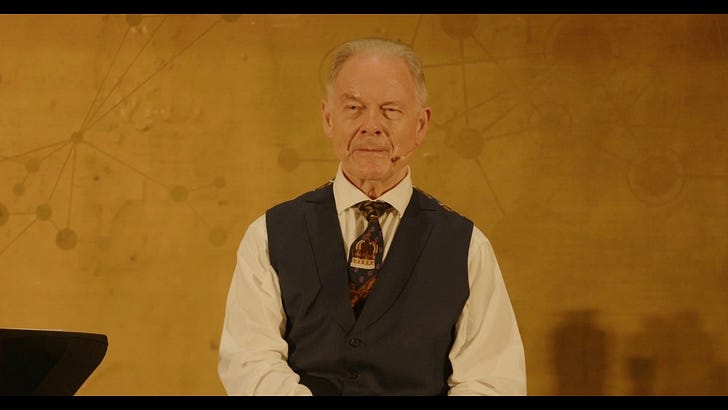
In a short time, I’ll go back to Daily Provisions to provide six hours of service to the community. The activity of the staff of this institution at the corner of is in play due to the work of Danny Meyer. His idea of “Enlightened Hospitality” means that he places his employees first. This has attracted me to be a supporter via my employment at this pla…
As I drop this off again, I’m moving on in my thinking to the cosmic purpose of our lives:
The Cosmic Perspective
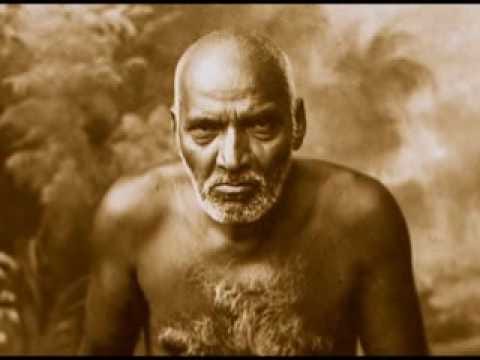
I don’t like making absolute statements. I know that I only have my own perspective. This morning, I stumbled upon the latest post from Maria Popova that came out yesterday and began reading it. It seems very much to be synchronistic with my own thinking of the moment - a louder and louder admonition coming up out of the Pleroma to think about all life. Here’s a pa…
There is so much more that I want to pass on to all of you as I move myself from dawn to dusk and back again. I’ve been very fortunate to be here for a bit more than 63 years. I’ve shored some fragments against my ruins and wish to arrange them into something of beauty for the benefit of others. I don’t know if it will reach anyone or not, but I will miss all the shots I do not take, so every keystroke is a shot on the goal.
How we do this is outlined in this post:
Musing on Substack and Its Contents

Civilization and Its Discontents by Sigmund Freud is my springboard for this article.
I am very grateful to have garnered 10 likes including one of our more important writers of esoterica: 𝐌𝐢𝐭𝐜𝐡 𝐇𝐨𝐫𝐨𝐰𝐢𝐭𝐳. There are so many voices out here in cyberspace, but we can help each other be heard. If there is a point in my writiing “How Do We Do” - that is it.
As we are, I am also reminded of Wavy Gravy’s mantra that he chanted at the time of Seva’s origins:
“The phrase “Do Be Do Be Do” serves as a playful spiritual mantra within the Seva Foundation, capturing the critical balance between “being” and “doing” in selfless service.
The Origin Story
The mantra famously crystallized during the early organizational meetings of the Seva Foundation in the late 1970s. Seva was co-founded by an eclectic group of public health visionaries, activists, and spiritual leaders, including Dr. Larry Brilliant, Ram Dass, and the iconic activist and clown Wavy Gravy.
During a heated debate regarding the foundational philosophy of the organization, a divide grew between two camps:
The “Doing” Camp: Focused heavily on Western metrics, aggressive execution, epidemiological frameworks, and practical, direct action to cure blindness.
The “Being” Camp: Spearheaded by spiritual seekers who favored a meditative, mindful, and culturally quiet approach. They emphasized the Eastern root meaning of seva—which translates from Sanskrit as pure, egoless “selfless service”.
As the factions went back and forth arguing for either a focus on “doing good” or “being good,” counterculture icon Wavy Gravy famously shattered the tension. Channeling a mixture of Frank Sinatra’s scatting and Zen wisdom, he shouted out: “Do be do be do!”
The Philosophical Meaning
The joke instantly became a foundational philosophy for the organization. It highlighted that true humanitarian work requires an active dance between two states of consciousness:
Do: Taking aggressive, practical action out in the world to relieve suffering (such as funding cataract surgeries).
Be: Maintaining an inner space of quiet, mindfulness, humility, and spiritual presence.
By synthesizing these two concepts into a playful melody, the founders reminded themselves that you cannot successfully change the world (”do”) without actively anchoring your own spirit (”be”), and vice versa.
If you want to dive deeper into this era, the story is beautifully detailed in Dr. Larry Brilliant’s spiritual memoir, Sometimes Brilliant.” - Generated by Google’s Gemini.
I could go on and often do, but for now, I think I’ll leave this here for all of you to see and hope to see something more than mere “likes” - engage with anything and everything here as you are able. We can change the world - a phone call from Wavy to Graham Nash gave us this:
The origin story of “Chicago” by CSNY:
Onward!
Click a button. Any button…