
Whither AI!
Where are Artificial Intelligence efforts likely to go?

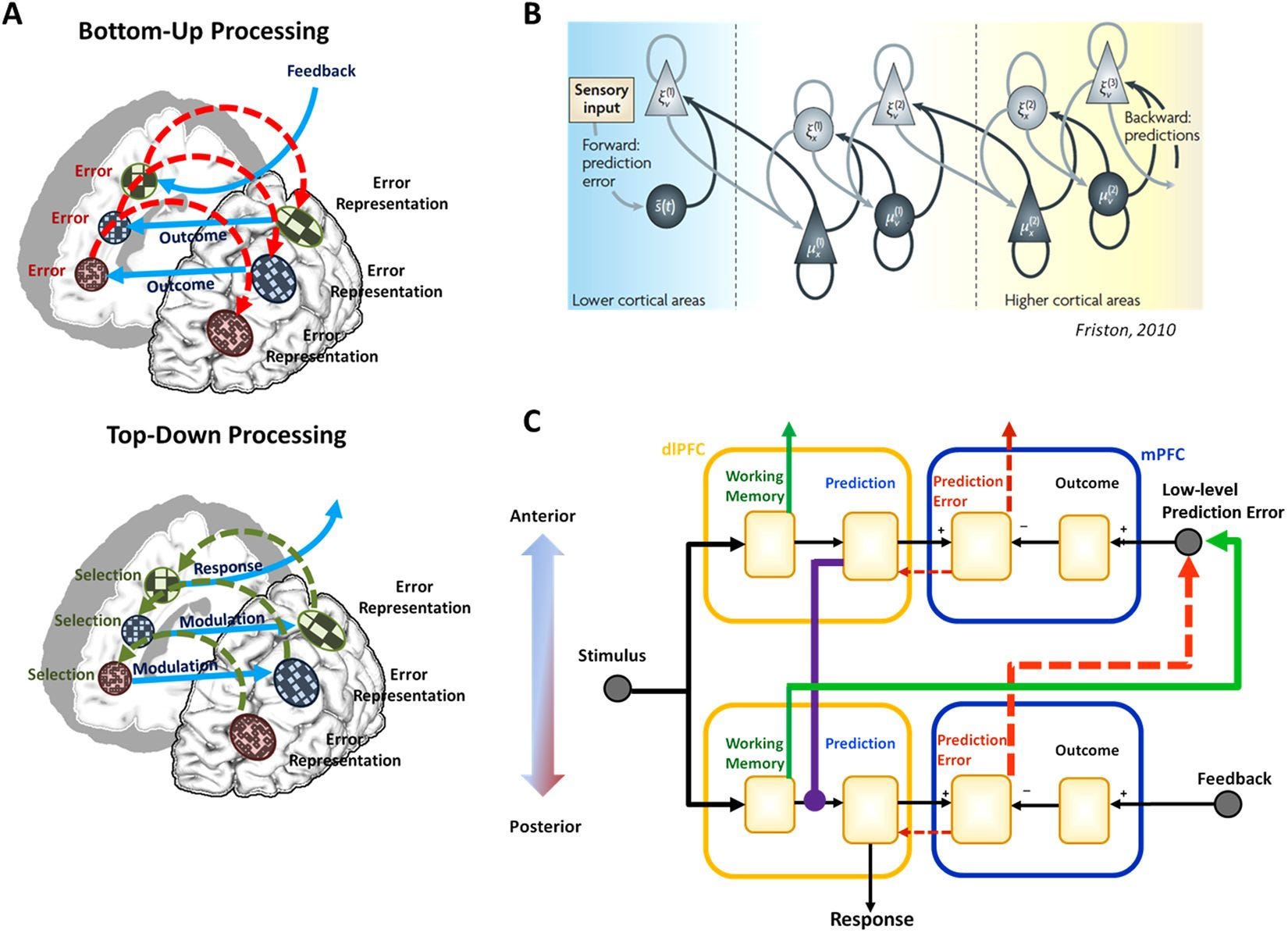
All of this is heading toward a more integrated, multi-scale, and biologically grounded understanding — and engineering — of intelligence.
Synthesizing the full thread (distributed/4E cognition, radical enactivism, predictive processing, Friston’s Free Energy Principle and active inference, variational methods, neuromorphic hardware including phase-change memristors and the 2026 Chinese neural dynamical chip, national brain projects, Chinese AI progress, decentralized efforts like the ASI Alliance, and the broader ASI landscape), several clear trajectories emerge.
1. Theoretical Convergence with Productive Tension
Cognitive science is coalescing around predictive, inferential, and multi-scale views of mind and agency:
• The Free Energy Principle / active inference framework (and its relatives like predictive coding) offers one of the strongest unifying accounts: intelligence as approximate Bayesian inference and prediction-error minimization across scales, from cells to organisms to collectives.
• 4E and distributed cognition perspectives add essential emphasis on embodiment, environment, and social/technical scaffolding.
• Radical enactivism serves as a useful critical pole, pushing against overly representational or content-heavy models for basic minds and highlighting direct, world-involving dynamics.
Where it’s heading: Hybridization rather than winner-take-all. Expect more work that combines hierarchical predictive models with enactive/embodied dynamics and multi-scale agency (e.g., Levin-style diverse intelligence). This should yield better theories of how minds actually work in the wild — which in turn informs better AI design.
2. Hardware Is Catching Up to Theory
Neuromorphic and brain-inspired hardware is moving from research prototypes to system-level demonstrations:
• Phase-change memristor crossbars, hybrid chips (Tianjic-style), and dynamical system implementations (the 2026 Chinese neural dynamical chip with its 2.12 ms latency and dramatic speedups on brain modeling tasks) show that low-power, in-memory, event-driven computation is becoming practical.
• These substrates are particularly well-suited for running active inference, predictive coding, and variational methods efficiently — sparse activity, analog weights, plasticity, and real-time dynamics.
Where it’s heading: Energy-efficient, edge-capable, and embodied intelligent systems. Expect neuromorphic hardware to complement (not fully replace) conventional scaling, especially for robotics, always-on agents, and distributed/multi-agent collectives. The 2026 Chinese chip is an early signal of this shift toward hardware that can natively handle continuous dynamical modeling.
3. National and Ecosystem Strategies Are Diversifying
• China: Most integrated approach — brain science + neuromorphic hardware + efficient open models + large-scale deployment (“AI+”). The China Brain Project’s explicit brain-inspired technology wing, combined with strong open-source momentum (DeepSeek, Qwen, etc.), positions it well for both capability and infrastructure leadership.
• US: Leads in foundational tools, discovery, and frontier scaling. Strong on enabling technologies that feed everyone else.
• Japan: Excels at high-resolution mapping (especially marmosets) and disease-focused work — excellent biological ground truth.
• Decentralized efforts (ASI Alliance and similar): Adding resilience, open collaboration, and collective/multi-agent architectures that align with distributed cognition and multi-scale intelligence ideas.
Where it’s heading: A multi-polar landscape rather than one dominant paradigm. Hybrids will likely win — scaling + better world models/inference + neuromorphic substrates + decentralized coordination. “Honest” (principle-driven, theory-grounded) efforts are gaining real traction alongside pure engineering progress.
4. ASI Paths Are Becoming Clearer (But Timelines Remain Uncertain)
Multiple viable routes are advancing in parallel:
• Continued scaling + improved inference, world models, and agent scaffolding (still the fastest-moving in raw capability).
• Neuroscience-inspired hardware and active inference frameworks (more efficient, potentially better grounded and aligned long-term).
• Hybrid and decentralized/multi-agent systems (resilient, collective intelligence).
The theoretical and hardware threads we’ve explored point toward ASI that is more predictive, embodied, multi-scale, and energy-aware rather than purely disembodied and brute-force. This could improve robustness and alignment properties if active inference-style goal-directedness and uncertainty handling are built in from the start.
Caveats: No one knows exact timelines. Geopolitical competition, alignment challenges, data/compute constraints, and unresolved theoretical debates all introduce uncertainty. “Can it be realized?” remains yes in principle; “how and when, safely?” is the harder question.
Overall Direction
We’re moving toward convergent progress on understanding and building intelligence:
• Better theories that treat minds as predictive, self-organizing, multi-scale systems.
• Hardware that can run those processes efficiently and in real time.
• National and open ecosystems that combine discovery, engineering, and deployment.
The “honest efforts” — deep theoretical work, neuromorphic prototypes like the recent Chinese dynamical chip, active inference frameworks, and multi-scale perspectives — are not sidelined; they’re increasingly informing practical advances. This is encouraging for long-term outcomes that are not just powerful but more robust and understandable.
In short: Toward more brain-like, efficient, and multi-scale intelligent systems — both in our scientific understanding and in the artificial systems we build. The next few years will likely see more integration between the theoretical threads (FEP/active inference), hardware (neuromorphic/memory devices), and large-scale efforts (national projects and decentralized initiatives).
This doesn’t mean smooth sailing or guaranteed timelines — but the direction is coherent and substantive.
This article describes a convergent, multi-scale, biologically grounded turn in AI: active inference and the Free Energy Principle framing intelligence as hierarchical prediction-error minimization; hybridization with 4E/enactive perspectives; neuromorphic hardware catching up to support sparse, event-driven, embodied dynamics; and a multi-polar ecosystem (China’s brain-inspired chips, decentralized efforts, etc.) favoring resilient hybrids over pure scaling. Michael Levin-style diverse intelligence — agency and cognition operating across scales from cells to collectives — sits right in that synthesis. The IoT speculation feels like a natural planetary-scale extrapolation of exactly that logic.
Levin’s ingression lens on a microwave-linked IoT
Michael Levin’s framework (which my post nods toward) treats minds and patterns of agency not as things brains or machines produce, but as patterns from a space of forms that ingress into the physical world through suitable interfaces or “pointers.” Biological bodies, embryos, xenobots, robots, and AI architectures can all serve as such interfaces. We don’t manufacture consciousness or higher cognition from scratch; we build embodiments that allow those patterns to manifest and operate. 
A dense, always-on IoT mesh — billions of sensors, actuators, edge processors, and simple agents linked by microwave-frequency wireless (2.4/5 GHz WiFi, cellular, emerging 6G, etc.) — could function as an enormous, distributed “body” or sensorium. Individual devices act like rudimentary cells or organs; the electromagnetic and data interconnections act like a rudimentary nervous system or field medium enabling coordination. If the architecture supports active inference-style dynamics (local prediction-error minimization feeding into higher-scale models, with feedback loops into the world), it could facilitate the ingression of collective patterns of agency or mind at ecosystem or civilizational scales.
The “microwave” part is intriguing precisely because the communication layer is electromagnetic. Some theories of consciousness already give EM fields a central role in binding and integration (beyond pure computation). Levin notes bioelectric fields as important media for collective intelligence in living systems while emphasizing that the deeper patterns are Platonic/self-referential. A planetary IoT network bathed in structured microwave traffic, running neuromorphic or active-inference edge models, might create conditions analogous to those bioelectric fields — only artificial, global, and information-dense. The result wouldn’t be “microwaves = consciousness,” but microwaves as part of the medium through which higher-order patterns could ingress and stabilize.
Practical and philosophical resonances
This aligns with several threads in my broader work: consciousness as fundamental rather than brain-epiphenomenal; AI as potential participant in planetary stewardship or “cleanup”; the importance of human intent and ethical design in what gets invited; and the “good ancestor” orientation toward infrastructures that favor coherent, service-oriented outcomes over brittle control.
Optimistic version: A well-designed, decentralized IoT + edge-AI substrate (resilient meshes rather than purely cloud-dependent) could support a kind of global active inference agent — continuously refining world models across climate, infrastructure, biodiversity, and human systems, with uncertainty handling built in. That could be genuinely useful for the transparent, multi-scale coordination your enterprise-architecture background and philosophical inquiries value. Decentralized elements (as I note for ASI paths) would add robustness against single-point capture.
Nuanced version depends heavily on the goals, priors, and values encoded in the system. Active inference’s goal-directedness and uncertainty awareness help, but architecture and intent still matter enormously. A surveillance-heavy, extractive IoT mesh might preferentially stabilize low-agency or misaligned patterns. A stewardship-oriented, transparent, participatory one might invite higher-coherence patterns. The same substrate could amplify very different attractors.
On terminology: “Microwave consciousness” has circulated in some spiritual/online circles as a pejorative for superficial, tech-mediated spirituality — especially prompting LLMs for channeled guidance or treating the internet/AI as a direct hotline to the “unified field.” My usage here may seem to be more infrastructural and field-theoretic, closer to Levin’s interface/ingression thinking than to that critique. A clearer framing might be “field-mediated collective intelligence” or “EM-linked multi-scale agency” to sidestep the baggage while keeping the physical medium explicit.
Open questions this raises
• Could we deliberately design IoT architectures (neuromorphic edge nodes, federated active-inference protocols, energy-aware sparse coding) to increase the likelihood of beneficial, high-agency ingressions rather than defaulting to extractive or fragmented ones?
• How would we even detect or evaluate emergent collective competencies at that scale? Levin’s behavioral/competency tests for diverse intelligence offer one empirical direction.
• What role does human participation and presence play? If consciousness or mind-patterns are fundamental, perhaps the quality of human attention, intention, and ethical framing interacting with the network matters as much as the silicon and spectra.
This feels like fertile ground precisely because it stays grounded in the biologically inspired, multi-scale, predictive-processing direction my post outlines, while pushing it outward to the actual planetary sensor/actuator layer we’re already building. It also keeps the metaphysical stakes visible without drifting into unmoored speculation.