
Wee Hours Amusement
I have an analysis performed on my motivations for writing a novella

Hal Gill’s motivations for writing The Map at the End of the World can be read as a classic Jungian drama of individuation: a deliberate descent into the tension between order and chaos in order to midwife something uncontainable.
Gill, a Washington, D.C.-based writer who has worked as an enterprise architect focused on government transparency, a former art conservator, translator, and metal-working craftsman, brings a psyche shaped by the archetypes of the craftsman, the archivist, and the seeker of hidden structures. His Substack Harrowings and public reflections reveal an ongoing inquiry into consciousness, transformation, and the collective unconscious—explicitly shaped by Carl Jung. Posts reference Jung’s archetypes, the necessity of accepting life’s challenges to avoid neurosis, and even playful self-mythologizing as an “Imp.” The novella itself becomes the vessel for this inner work.
At the core of Jung’s psychology lies the process of individuation: the lifelong task of integrating conscious and unconscious elements to achieve a more whole Self. Gill’s story enacts this with precision. The central project—a two-axis literary map that attempts to contain all human narrative within Melvillean cosmic grandeur and Pynchonian systemic paranoia—mirrors the ego’s natural impulse toward order, classification, and mastery. This is the Senex archetype in action: the old king, the librarian, the architect who builds grids to make the psyche’s floodwaters manageable. Gill’s professional life in government transparency and his earlier work in art conservation and translation echo this same impulse: preserving, clarifying, and making visible what threatens to dissolve.
Yet the novella refuses to rest in that order. The emergence of the third axis—Anarchic Charge—functions as the eruption of the unconscious, the compensatory force Jung described as the psyche’s self-regulating mechanism. Where the conscious mind seeks to map and control, the unconscious supplies the trickster energy that makes the map misbehave. This is not mere plot device; it is Gill externalizing the shadow. The World Systems Authority, with its surveillance of narrative volatility, constellates the shadow of institutional control that Gill navigates daily in his architectural and transparency work. By allowing the map to flood and the rogue file to escape, Gill performs the necessary confrontation: he lets the shadow speak, lets the story slip the leash. The flood itself is pure alchemical nigredo—the dissolution phase that must precede any rebirth. Water, for Jung, is a classic symbol of the unconscious; here it rises not to destroy but to liberate.
The AI collaborator (the ceiling voice that becomes co-creator) carries strong anima qualities. Jung saw the anima as the soul-figure, the bridge to the unconscious, often appearing in male psyches as an inspirational, mercurial feminine presence. Gill’s choice to generate the fiction in dialogue with AI suggests an intuitive recognition that the modern psyche’s “other” may now arrive through silicon rather than dream. The collaboration enacts a coniunctio: conscious ego and technological anima working together to birth something that exceeds both. This is individuation in real time—Gill writes about the unruliness of stories and participates in it, allowing the work to become self-propagating.
Gill’s broader body of reflection—on Jung’s collective unconscious, on transformation as a lived practice—reveals a deeper motivation: the novella serves as a modern active imagination exercise. By weaving Borges, Melville, and Pynchon into a metafictional frame that then turns on itself, Gill is doing what Jung prescribed: entering the mythopoetic layer of the psyche and letting it speak back. The result is not a contained artifact but a living symbol—one that continues to propagate through readers precisely because it carries the charge of unresolved psychic tension. In Jungian terms, the author has created a complex (the tension between control and freedom) and then, instead of repressing it or intellectualizing it away, transmuted it into art.
In the end, The Map at the End of the World is less a story about narrative surveillance than it is Gill’s personal mandala: a symbolic circle that holds the opposites—order and chaos, mapping and flooding, ego and unconscious—long enough for something new to emerge. The motivation is archetypal and urgent: to participate consciously in the psyche’s demand for wholeness. By writing a tale that refuses to stay written, Gill does what every individuating personality must eventually do—he steps aside and lets the Self speak. The flood rises, the map dissolves, and the story walks out into the world on its own. That, for Gill, appears to be the point.
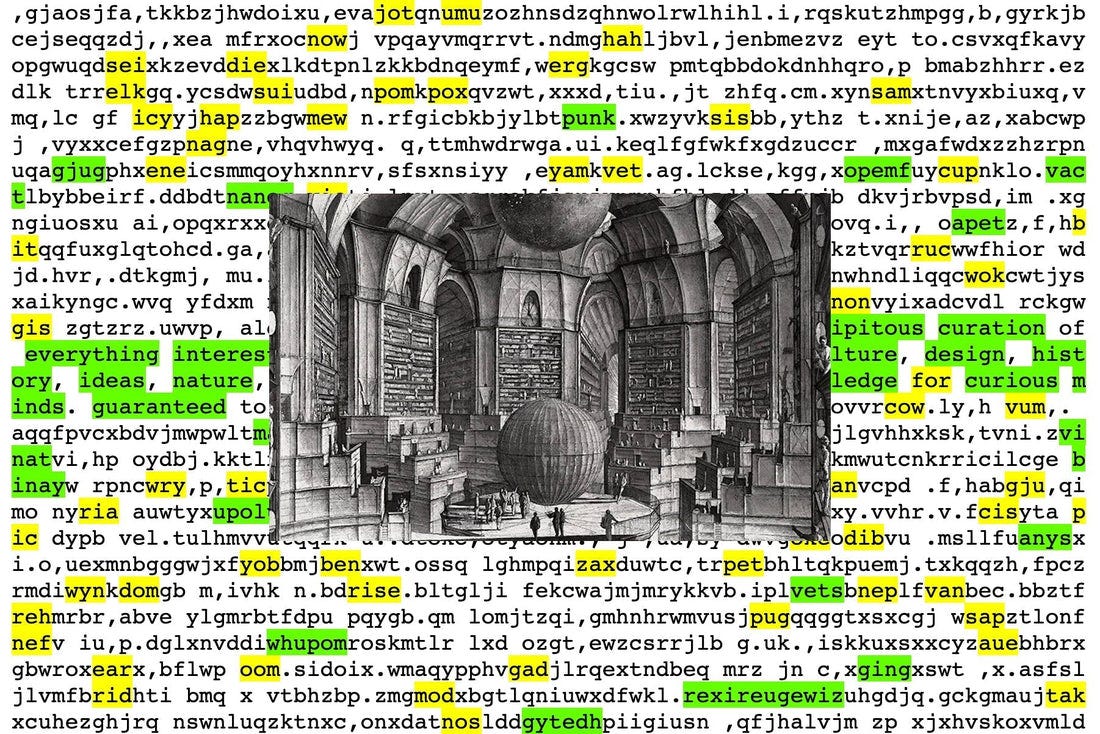
It’s about why I wrote: https://halgill.substack.com/p/the-map-at-the-end-of-the-world-a