
Time-Binding
A musing on what sets us apart....

“Time-binding,” a concept from the field of general semantics, was pioneered by the Polish-American philosopher and scientist Alfred Korzybski in the early 20th century. It ties into the very essence of human history.
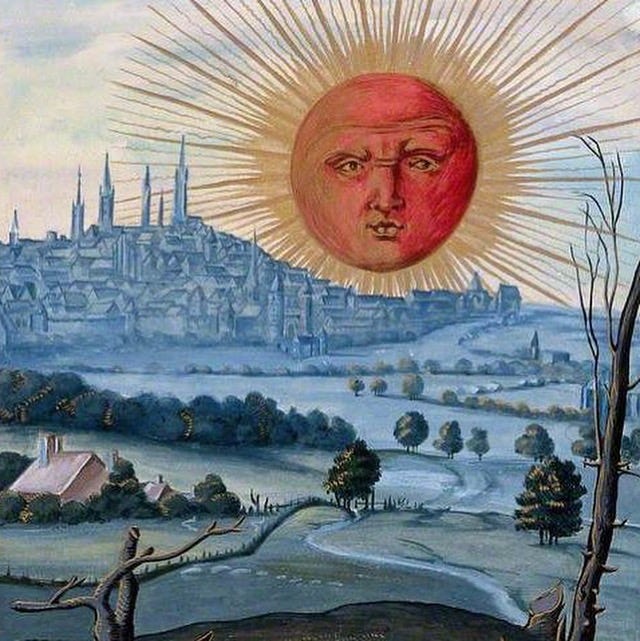
What Is Time-Binding?
At its core, time-binding refers to the uniquely human ability to accumulate, preserve, and transmit knowledge across generations through symbols, language, and abstractions. Korzybski introduced this idea in his 1921 book Manhood of Humanity, where he defined humans not just as rational beings but as a “time-binding class of life.” Unlike plants, which he called “chemistry-binders” (they transform energy through chemical processes), or animals, which are “space-binders” (they navigate and adapt to their physical environments in the present moment), humans can “bind time” by building on the experiences and discoveries of those who came before us.
Think of it like this: A dog might learn a trick through trial and error, but it can’t write a manual or tell stories to pass that exact knowledge to future generations of dogs. Humans, on the other hand, can record inventions, philosophies, and lessons in books, art, or digital archives, allowing progress to compound over time. This isn’t just about memory—it’s about creating a cumulative cultural inheritance that spans centuries.
How Does Time-Binding Serve as a Source of History?
History, in Korzybski’s view, isn’t just a timeline of events—it’s the direct outcome of time-binding. Without this ability, there would be no “history” as we know it, because we’d be stuck in an eternal present, like other animals. Instead, time-binding creates history by:
1. Accumulating Knowledge: Every scientific breakthrough, cultural tradition, or technological advancement is a layer added to the human story. For example, the invention of writing around 5,000 years ago supercharged time-binding, turning oral stories into permanent records that could be studied and built upon. This is why history feels like a chain: Newton’s laws rest on Galileo’s observations, which draw from ancient Greek thinkers.
2. Enabling Progress and Civilization: Korzybski argued that time-binding is the engine of human evolution beyond biology—it’s “human engineering.” History emerges as we refine and expand this knowledge base, leading to everything from the Renaissance to the digital age. But it’s not always linear; misunderstandings or “binding biases” (like outdated assumptions carried forward) can lead to conflicts or regressions, which also become part of the historical record.
3. Shaping Identity and Culture: On a societal level, time-binding fosters shared narratives. Myths, laws, and histories bind communities together, creating a sense of continuity. Korzybski saw this as key to humanity’s “manhood” (maturity), but he warned that poor use of language—our primary time-binding tool—could distort reality and lead to problems like wars or dogmas.
In essence, time-binding is the source of history because it transforms isolated experiences into a collective, evolving tapestry. Without it, we’d have no libraries, no scientific method, no lessons from the past to inform the future. Korzybski believed understanding this could help us use it more wisely, promoting sanity and progress through better semantics (hence his famous phrase: “The map is not the territory”).
If time-binding is the feature, it’s clear that binding bias is the bug. The philosopher describes these concepts as a hierarchy with plants on the first tier, animals on the second and human time-binding at the top. I’m not sure the author is correct there. I think there may be some version of prehistoric time-binding that occurs in animals, only without the bugs. Perhaps this is superior.
Time-binding is indeed a very interesting concept, connected to History. And we rely on History for so many things, not knowing that it is just one timeline of many. When disagreements occur about what happened, what if both parties are right, because they connected to different timelines? But what if we humans also in reality are stuck in an eternal present, in the NOW? What if linear time only has relevance when our brains are involved? What if outside of that, all times are NOW. This is what many NDEs reveal. Outside of brain-influence access to different times AT ONCE are possible. In the dream state similar experiences are possible. Interesting prospects, eh? :) Maria