
The York County Project

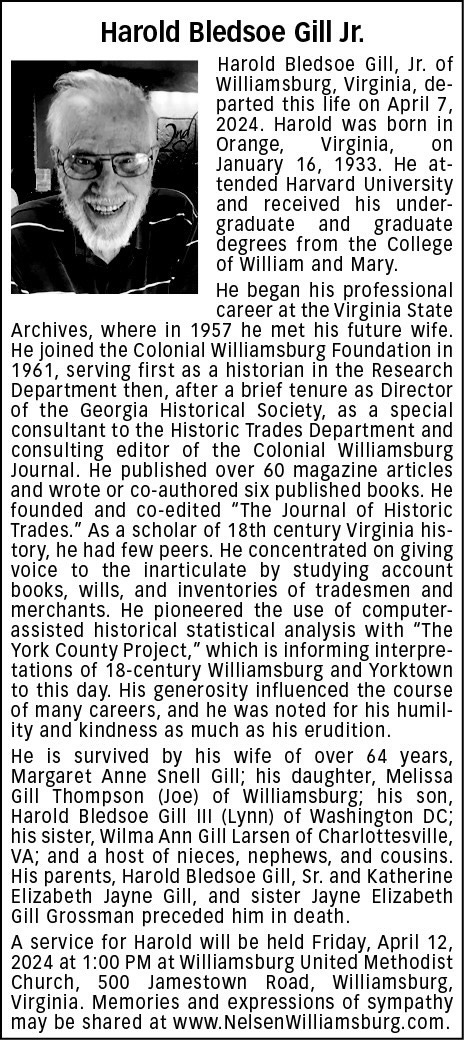
The York County Project (initiated by Harold B. Gill Jr. in the late 1970s–1980s at Colonial Williamsburg’s Research Department) produced three main scholarly outputs: a massive index with abstracts of court records, a computer-generated plat map, and keyword-searchable transcriptions of estate inventories. These tools enabled one of the earliest large-scale computer-assisted statistical analyses of colonial Virginia life, drawing on primary sources to quantify wealth, trades, consumerism, slavery, family structures, and daily material culture for “the inarticulate” (ordinary people). The project covered records from 1633–1815, a period when York County included much of modern Williamsburg and Yorktown (neighboring James City County and Williamsburg records were largely lost in the Civil War).
1. Comprehensive Index and Abstracts of Court Records
• Scope: Deeds, wills, inventories, court orders (civil suits and criminal cases), plus some non-court items such as the Bruton Parish Register.
• Organization (multi-indexed for usability):
• Free persons: by surname, then date.
• Slaveowners: by surname.
• Enslaved individuals: by first name (with a dedicated slave first-name/surname file; e.g., sample entry for “Old Judy”).
• Chronological: by court record book and record type.
• Scale: Over 800,000 court record entries (including nearly 80,000 referencing enslaved individuals).
• Purpose: Abstracts allowed rapid searching and statistical analysis of patterns invisible in narrative histories alone.
This index/abstract database remains the project’s core output and has supported dozens of theses, dissertations, books, and monographs on topics like urbanization, colonial social development, slavery, gender, religion, land use, westward expansion, and the American Revolution.
2. Computer-Generated Plat Map
• A unique visual output: It plots families and individuals onto the land with which they were historically associated.
• Based on identifications from the 1704 quit-rent rolls (tax lists of names and acreage sent to the Crown).
• Created using early personal computers (DOS/dBase/WordPerfect era) to cross-reference records—cutting-edge digital humanities work at the time.
3. Keyword-Searchable Transcriptions of York County Estate Inventories
• Publicly available online: A large selection of 17th- and 18th-century estate inventories (legal documents listing household possessions, room-by-room valuations for wealthier estates, debts, etc., used to settle estates).
• Access: Searchable via Colonial Williamsburg’s Digital Library at https://research.colonialwilliamsburg.org/DigitalLibrary/inventories/ (or the dedicated search page).
• These survived because York County records were hidden locally rather than sent to Richmond (where many others burned in 1865).
Access and Current Status (as of 2026)
• Full index and plat map: Available by appointment only through Colonial Williamsburg Corporate Archives. Contact: rocklibrary@cwf.org or 757-565-8510.
• Ongoing digitization: Colonial Williamsburg partnered with Ancestry.com to digitize the entire index (over 800,000 cards). As of early 2025 updates, more than 147,000 cards had been processed, with completion targeted for early 2026. Once public on Ancestry (or via CW), it will greatly expand remote access.
• The project’s data continues to inform daily interpretations in Colonial Williamsburg’s Historic Area (e.g., everyday 18th-century life, slavery, consumerism).
No standalone books or publications were issued directly from the project; it functions as an internal research database/tool that has quietly underpinned generations of scholarship and public history at Colonial Williamsburg and beyond. The Harold B. Gill Foundation (via its Substack Harrowings) continues to preserve and discuss related unpublished materials from Gill’s work. For the most current status on digitization or appointments, check the official Colonial Williamsburg Research site or contact the archives directly.
800,000 cards about the inarticulate. That's an archive as an act of mercy.