
Response and Responsibility
Getting down to brass tacks

Compensatory Psychological Mechanisms
What the conversation the other evening showed me
Following up on the conversation about a situation that had played out in and out of an AA meeting. It involved a guy being ridiculed for attempting to to pick up a three year chip a few hours ahead of the moment.
I don’t know the whole of it. I only know how it seemed to me in that exchange, and how it kept circling back to a song I’ve carried for years. The one Robert Hunter and David Gans wrote. The chorus that says, plain as day: Shut up and listen, a minute or two. Shut up and listen, you could pick up a clue.
And later: Walking in the storm with my ear to the blast, thinkin’ each moment could be my last. A small still voice seemed to beckon within, so quiet in there you’d hear the drop of a pin.
That small still voice, and the turn toward silence at the end of the note I posted, felt like the only honest response I had. But the pattern itself—the compensatory move—deserved a closer look. So I sat with it.
1. What Adler Helps Me See
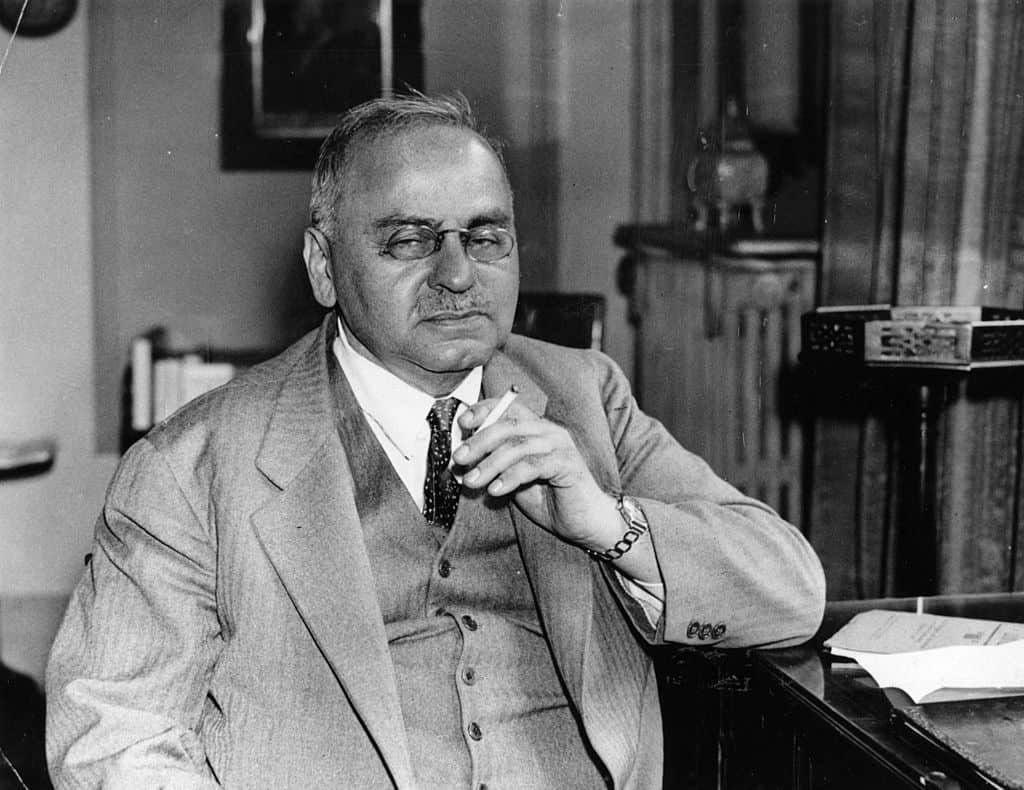
Alfred Adler started from the simple fact that every human being begins in a state of real dependence and limitation. We feel small, we feel lacking, we feel the gap between what we are and what the world seems to require. That feeling, he said, is not a flaw to be erased; it is the engine. We move toward overcoming it. We compensate.
Healthy compensation is straightforward enough. A person senses a weakness in one place and pours attention into another until a genuine strength appears. It can look like the child who struggles with words and finds a voice through drawing, or the one who feels physically small and learns to move with precision and power. The striving serves life.
But when the feeling of inferiority is too raw or too defended against, compensation turns into overcompensation. The person does not simply develop a strength; they construct an armor of superiority. They reach for status, for correctness, for the high ground of principle itself, not to serve but to shield. Adler called this the superiority complex, and he saw it as the other face of the same wound. The louder the display of being above, the deeper the hidden conviction of being beneath.
What landed for me in the conversation was how cleanly this described the move I was witnessing. Principles that had been delivered—by ancestors, by recovery, by whatever tradition had spoken—were being used, in the moment, as weapons of elevation rather than as ground for presence. The cultural code became the compensatory structure. And the person on the receiving end felt the diminishment, even if the one wielding it could not yet name their own fear.
2. The Defense Layer
The psychoanalytic tradition named compensation as one of the ways the psyche covers a deficit by emphasizing something else. It sits alongside reaction formation—doing the exaggerated opposite of what one actually feels—and projection, in which the disowned part is located in the other person and then attacked there. All of them serve the same end: keeping the raw feeling of inadequacy out of awareness.
In the situation the fellow described, and in so many I have watched or participated in, the move was rarely conscious malice. It was the machinery running on its own. The principles were known. The words were correct. But the underlying stance was still organized around not feeling small. So the code was applied to the other rather than lived in the self.
3. Jung’s Way of Seeing the Same Thing
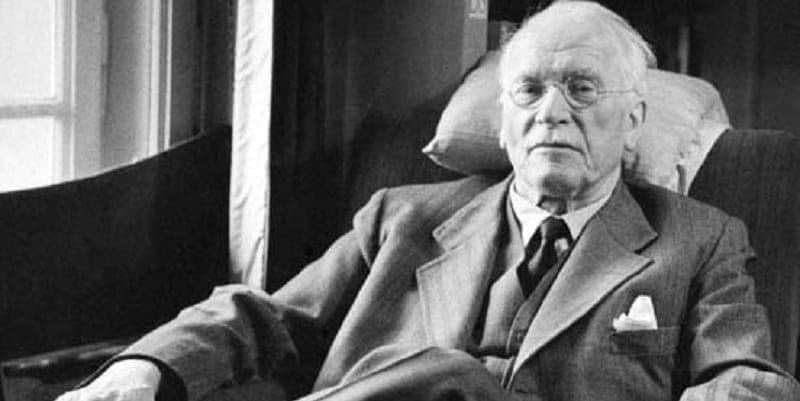
Jung described compensation from another angle. For him the psyche is self-regulating. When consciousness becomes too one-sided—too identified with being right, too certain, too moralized—the unconscious begins to compensate. It sends dreams, symptoms, relational collisions, or quiet inner promptings that restore balance. The more rigidly the ego clings to its superior position, the stronger the compensatory pressure from below.
The small still voice in the song is, to me, exactly this. It does not shout. It waits until the storm of self-justification is turned off. Then it can be heard. Jung would say that the very inflation of being the one who knows the principles is what calls the compensating humility into existence—whether we welcome it or not.
4. How the Pattern Scales to Groups and Codes
What Adler saw in the individual shows up just as clearly between people and inside institutions. When personal worth feels shaky, the group identity or the shared code becomes the compensatory resource. We are the ones who understand. They are the ones who do not. The code itself—recovery language, spiritual language, ancestral language, political language—gets pressed into service as armor rather than as living transmission.
This is the part that troubles me most in the work I’m trying to do. The principles I received (from my father’s life and writing, from the rooms, from the old teachers) are not mine to weaponize. Yet the temptation is always present: to use the very thing handed down as a way of standing taller than the person in front of me. That is not transmission. That is overcompensation wearing the clothes of responsibility.
5. When It Serves and When It Does Not
Compensation is normal. Many of the things I most respect in others—and the capacities I have managed to grow in myself—began as responses to felt limitation. The question is whether the striving remains in service to life and to the other, or whether it requires the other’s diminishment to stay intact.
When compensation stays conscious and flexible, it can become contribution. When it hardens into a fixed superiority structure, it blocks exactly what the principles were meant to open: humility, curiosity, and the capacity to be wrong in front of someone else.
6. What Actually Interrupts the Machinery
The practices that cut across the compensatory loop are simple and old. They are also the ones I keep returning to because nothing else has worked as well.
Listening—real listening, the kind that does not prepare its rebuttal while the other is still speaking—is the most direct counter. It refuses the superior position by making the other person’s experience more interesting, for a moment, than one’s own defense. Silence does something similar from the inside. It lets the small still voice become audible before the machinery of justification starts up again.
Self-inquiry of the plainest sort—asking, without drama, “What am I trying not to feel right now?”—often reveals the inferiority feeling that the superiority display was protecting. In recovery language this is inventory. In Adler’s language it is looking at the style of life. In Jung’s it is noticing which unconscious content is being compensated for.
None of these practices eliminate the mechanism. They simply make it choosable rather than automatic.
7. What This Asks of the Time Binding Work
If the task is to pass on what has been received—principles, stories, ways of living that actually sustain life—then the compensatory temptation has to be met in real time. Otherwise the transmission carries the opposite message: that the code is a tool for elevation rather than a ground for presence.
I don’t have a finished answer. I only know that the conversation the other evening, and the song that surfaced afterward, are asking me to stay closer to the place where I do not yet know. That is where the small still voice can actually be heard. That is also where the principles I claim to value have the best chance of becoming something more than another compensatory structure.
So I recommend this to everyone, including myself. Let’s enter into the silence.
Onward.