
2776 Vision
Musing on our future

I’ve been thinking…

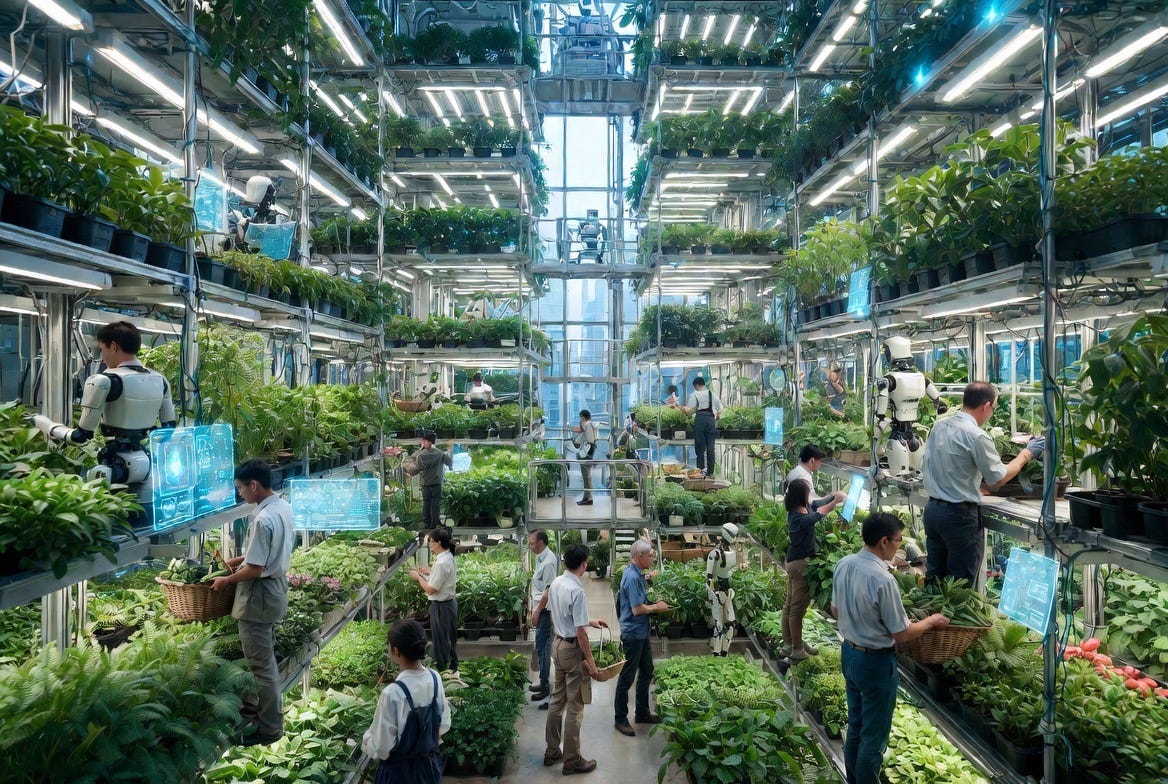

Here’s a realistic overview of major initiatives currently underway (as of mid-2026) that directly support the optimistic 2776 vision of a thriving, climate-adapted megacity with human-AI symbiosis, resilient design, and successfully navigated existential risks.
Progress is real but uneven — many efforts are still early-stage or under-resourced relative to the scale needed. However, several high-leverage tracks are advancing in parallel.
1. AI Safety, Alignment & Governance (Critical for Human-AI Symbiosis)
Significant momentum has built since 2023–2024.
• International AI Safety Report 2026 — Led by Yoshua Bengio with over 100 experts and backing from 30+ countries, the EU, OECD, and UN. It assesses capabilities, risks, and management strategies for general-purpose AI. This is the largest global scientific collaboration on AI risks to date.
• EU AI Act Implementation — Phased rollout continues in 2026, with high-risk obligations and general-purpose AI rules actively taking effect. This is the world’s most comprehensive binding AI regulation.
• Partnership on AI Governance Priorities (2026) — Focus on governing AI agents, documentation standards, evaluation infrastructure, and closing capacity gaps (especially in the Global South).
• National and Lab Efforts — Growing number of government AI safety institutes, red-teaming programs, and voluntary/mandatory frontier model evaluation frameworks. Private labs continue internal safety work, though external oversight is increasing.
• Research Initiatives — Projects like SPAR (Summer Program on AI Risk) and various mechanistic interpretability/alignment research programs are expanding.
These efforts aim to create the governance and technical foundations for safe, beneficial AI systems that could power the optimized, symbiotic cities in the vision.
2. Climate Mitigation, Carbon Removal & Adaptation
• Carbon Removal Acceleration — Multiple challenges and R&D programs are active (e.g., the 2026 Carbon Removal Challenge winners from universities focusing on novel mineralization and waste-based approaches). Private and philanthropic funding continues to grow.
• Advanced Nuclear & SMR Development — Strong activity in small modular reactors. The EU published its SMR strategy, with national roadmaps (e.g., Poland) and increasing private deployment interest. This supports firm, low-carbon power needed for abundant clean energy.
• Fusion Progress — Private fusion companies have attracted over $9.6 billion in investment. The EU is expected to release a dedicated 2026 fusion strategy. While still pre-commercial, momentum is building.
• Urban and Infrastructure Resilience — City networks (such as C40) and national adaptation funds continue investing in sea walls, green-blue infrastructure, heat resilience, and nature-based solutions — directly relevant to the climate-adapted coastal megacity design.
3. Biosecurity & Pandemic Preparedness
• Global Health Security Conference (GHS 2026) — Major convening in Kuala Lumpur focused on practical collaboration, governance, and technical capabilities.
• NTI | bio and Related Work — Active on biosecurity under the emerging Pandemic Accord framework, emphasizing norms, technical capabilities, and accountability (“three-legged stool” approach).
• WHO Strategies — Ongoing implementation of frameworks for epidemic-prone diseases (yellow fever, cholera, influenza) and broader health security strengthening.
• Surveillance and Dual-Use Research Oversight — Continued investment in genomic surveillance networks and efforts to improve oversight of high-risk biological research.
These reduce the chance of civilization-scale setbacks that could derail long-term progress.
4. Energy Abundance & Supporting Technologies
• Advanced Nuclear Deployment Push — Multiple countries and companies are moving SMR designs toward licensing and construction.
• Carbon Removal & Negative Emissions — Growing portfolio of projects and challenges testing scalable approaches.
• Clean Energy Scaling — Continued (though still insufficient in many regions) deployment of renewables alongside efforts to firm the grid with advanced nuclear and storage.
5. Cross-Cutting & Foundational Work
• International Scientific Collaboration — The International AI Safety Report and various climate/biosecurity forums show growing (if imperfect) multilateral scientific cooperation.
• Long-termist and Existential Risk Research — Organizations and academic centers continue work on AI alignment, biosecurity, and civilizational resilience, feeding into policy and technical development.
• Urban Innovation — Pilot projects in vertical farming, integrated green infrastructure, and smart city systems are scaling in various cities, providing real-world testing grounds for the 2776 vision.